
rexroth a10v service manual pdf
Rexroth A10V Service Manual PDF: A Comprehensive Guide
Essential for A10V pump maintenance, these PDF manuals (versions 7/2015 & 06/2016) detail disassembly, repair, and Bosch Rexroth specifications.
Rexroth’s A10V series represents a robust and versatile line of axial piston variable pumps, widely utilized in mobile and industrial hydraulic applications. These pumps, including the A10VSO and A10VO variations, are known for their high efficiency, compact design, and ability to handle demanding operating conditions. Understanding the intricacies of these pumps is crucial for effective maintenance and repair, making access to comprehensive documentation, like the service manual, paramount.
The A10V series offers a range of displacement options and configurations, often featuring C or D flanges for flexible installation. Proper servicing requires familiarity with specific model designations, such as the A10VSO 18 DR /31R-PKC62N00, and adherence to Bosch Rexroth’s guidelines, detailed within the official manuals.
Understanding the A10VSO Variable Displacement Pump
The A10VSO is a key member of the Rexroth A10V family, distinguished by its variable displacement capability. This allows for precise control of flow rate, adapting to varying system demands and optimizing energy efficiency. The pump’s design incorporates a swashplate mechanism, which dictates the stroke of the pistons within the cylinder block.
Understanding how this mechanism functions is vital for troubleshooting and repair, information readily available in the service manual (versions like 7/2015 and 06/2016). Correct operation relies on precise swashplate adjustment and proper sealing to prevent internal leakage. The A10VSO’s performance is also heavily influenced by fluid compatibility and filtration, as outlined in Bosch Rexroth documentation.
Importance of the Service Manual
A comprehensive Rexroth A10V service manual PDF is indispensable for anyone working with these hydraulic pumps. These manuals, such as those dated 7/2015 and 06/2016, provide detailed step-by-step disassembly and reassembly instructions, crucial for accurate repairs. They also contain vital torque specifications (following DIN 13 standards) to ensure proper component fastening.
Access to official Bosch Rexroth documentation minimizes errors and ensures safety. Ignoring these guidelines can lead to reduced pump performance, increased downtime, and potential damage. The manual also covers troubleshooting common issues like noise and vibration, leakage, and pressure fluctuations, enabling efficient diagnostics and effective solutions.

A10V Series Pump Components
A10V pumps feature key parts like the swashplate, cylinder block, valve plate, and shaft – all detailed within service manuals.
Swashplate Mechanism
The swashplate is a critical component within the Rexroth A10V series, directly controlling the pump’s displacement and, consequently, the flow rate. Service manuals emphasize meticulous inspection of the swashplate for wear, scoring, or damage, as these imperfections significantly impact pump performance.
Adjustment procedures, detailed in the PDF documentation, are crucial for optimizing pump output. Correct swashplate angle settings are vital for achieving desired pressure and flow. The manuals provide specific torque specifications (DIN 13) for swashplate mounting bolts, ensuring proper clamping force. Improper adjustment can lead to reduced efficiency, increased noise, or even pump failure. Understanding the swashplate’s function and proper maintenance is paramount for reliable operation.
Cylinder Block and Pistons
Rexroth A10V service manuals dedicate significant attention to the cylinder block and piston assembly, highlighting their role in converting mechanical energy into hydraulic power. Detailed disassembly instructions within the PDF guides emphasize careful handling to prevent damage to these precision components.
Inspection focuses on piston shoe wear, cylinder bore scoring, and piston seal integrity. The manuals specify acceptable wear limits and provide guidance on replacement procedures. Maintaining proper clearances between pistons and cylinder bores is critical for efficient operation. Component cleaning is also stressed before reassembly. The spare parts list (Part No.: R910940516) aids in identifying correct replacement parts for optimal performance and longevity.
Valve Plate Assembly
The Rexroth A10V service manual PDF provides extensive detail regarding the valve plate assembly, a crucial component controlling fluid distribution within the pump. It outlines precise procedures for removal, inspection, and installation, emphasizing the importance of cleanliness to avoid contamination.
Manuals detail checking for wear or damage on the valve plate surfaces and ports, as even minor imperfections can lead to reduced pump efficiency or internal leakage. Torque specifications (DIN 13) are critical during reassembly to ensure proper sealing and prevent distortion. The documentation often references specific housing types – C flange or D flange – impacting valve plate compatibility. Proper valve plate function is paramount for achieving desired pump performance.
Shaft and Seals
The Rexroth A10V service manual PDF dedicates significant attention to the shaft and seals, highlighting their role in preventing leakage and maintaining system pressure. Detailed diagrams illustrate proper seal installation techniques, emphasizing the use of appropriate tools to avoid damage.
The manual stresses the importance of inspecting the shaft for wear, corrosion, or runout before reassembly. Seal replacement guidelines are provided, specifying compatible materials and lubrication procedures. Torque specifications (DIN 13) are crucial for securing shaft components. The documentation often references part numbers like R910940516 for spare parts identification. Maintaining shaft and seal integrity is vital for reliable pump operation and preventing costly downtime.

Accessing the Rexroth A10V Service Manual PDF
Bosch Rexroth provides official documentation, while third-party repositories offer access; always verify version control (e.g., 7/2015, 06/2016) for accuracy.
Official Bosch Rexroth Documentation Sources
Bosch Rexroth AG, headquartered in Stuttgart, Germany, is the primary source for authentic A10V service manuals. Accessing these resources directly ensures you receive the most accurate and up-to-date information for your specific pump model. Contacting their Service Hydraulics department (An den Kelterwiesen 14, 72160 Horb, Germany, +49 (0)7451/92-1207) is a reliable method.
However, navigating their documentation portal can sometimes be complex. Be prepared to identify your exact A10V variant (e.g., A10VSO 18 DR/31R-PKC62N00) and the corresponding manual version (like 7/2015 or 06/2016) to locate the correct PDF. Official documentation often includes detailed parts lists (Part No.: R910940516, Drawing no.: R910926402) and crucial safety information.
Third-Party Manual Repositories
While Bosch Rexroth provides official documentation, numerous third-party websites archive and distribute A10V service manuals in PDF format. These repositories can offer convenient access, but caution is advised. Verify the source’s credibility and ensure the manual matches your specific A10V model and revision date (e.g., 7/2015, 06/2016).
Information accuracy isn’t always guaranteed on these platforms. Cross-reference details with official Bosch Rexroth specifications whenever possible. Be aware that some sites may require registration or payment for access. Always prioritize safety and consult official documentation for critical repair procedures, especially regarding torque specifications (DIN 13) and component cleaning.
Version Control and Manual Updates (e.g., 7/2015, 06/2016)
Rexroth A10V service manuals undergo periodic revisions, indicated by a date stamp (e.g., 7/2015, 06/2016). Utilizing the correct version is crucial for accurate repair procedures and safety. Older manuals may contain outdated information regarding component specifications, torque values (DIN 13), or recommended maintenance practices.
Always confirm the manual’s version aligns with your pump’s manufacturing date or serial number. Bosch Rexroth frequently updates documentation to reflect design improvements and address identified issues. Regularly check for newer revisions on the official Bosch Rexroth website to ensure you have the most current and reliable information for A10V pump servicing.

Common A10V Pump Issues & Troubleshooting
A10V pumps can exhibit noise, vibration, pressure fluctuations, or leakage; the service manual aids in diagnosing and resolving these common hydraulic problems.
Noise and Vibration Analysis
Identifying the source of unusual noises and vibrations within the A10V pump is crucial for preventative maintenance. The Rexroth service manual provides detailed guidance on analyzing these symptoms, often linked to cavitation, air ingestion, or internal component wear.

Specific sections outline diagnostic procedures, including listening tests at various points on the pump housing. The manual emphasizes checking for loose mounting bolts, proper fluid levels, and contamination.
Furthermore, it details how to differentiate between normal operational sounds and those indicating a developing fault. Understanding these nuances, as outlined in the PDF, allows technicians to pinpoint issues before they escalate into major failures, minimizing downtime and repair costs.
Pressure Fluctuations and Causes
The Rexroth A10V service manual PDF dedicates significant attention to diagnosing pressure fluctuations, a common symptom of pump issues. These fluctuations can stem from several sources, including worn control elements, valve plate damage, or internal leakage.
Detailed troubleshooting steps guide technicians through identifying the root cause, emphasizing the importance of checking swashplate settings and piston slipper wear. The manual highlights how improper adjustments or component degradation can lead to inconsistent pressure delivery.
Moreover, it explains how to interpret pressure gauge readings and correlate them with specific pump conditions. Correctly identifying the cause, using the manual’s guidance, is vital for effective repair and restoring optimal system performance.
Leakage Identification and Repair
The Rexroth A10V service manual PDF provides comprehensive procedures for identifying and rectifying leakage issues within the pump. It details how to pinpoint leak sources – from shaft seals and valve plates to cylinder block joints – using specific diagnostic techniques.
Crucially, the manual emphasizes the importance of using compatible fluids and correctly installed seals. It outlines step-by-step instructions for seal replacement, including torque specifications (DIN 13) to ensure proper compression and prevent future leaks.
Furthermore, it addresses potential causes of leakage beyond seal failure, such as housing damage or worn components, guiding technicians through necessary repairs or replacements for a lasting solution.
Reduced Flow Performance
The Rexroth A10V service manual PDF dedicates significant attention to diagnosing and resolving reduced flow performance. It details how to systematically check for internal wear within the cylinder block, pistons, and valve plate assembly – common culprits affecting pump output.
Specifically, the manual guides technicians through inspecting the swashplate mechanism for proper adjustment and potential damage, as misalignment directly impacts displacement and flow rate. It also covers checking for contamination within the hydraulic fluid, as debris can restrict flow passages.
Troubleshooting steps include pressure testing at various ports and analyzing noise patterns to isolate the source of the performance decline, ensuring accurate and effective repairs.

A10V Pump Maintenance Procedures
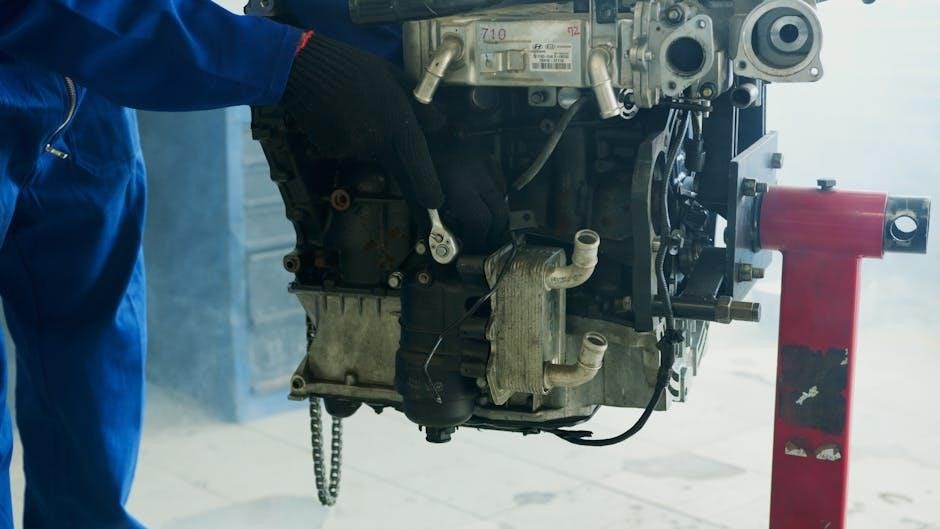
The A10V manual PDF stresses fluid compatibility, regular inspections, seal replacement, and precise swashplate adjustments for optimal pump longevity and performance.
Fluid Compatibility and Filtration
Maintaining proper fluid cleanliness is paramount for A10V series pumps, as detailed within the Rexroth service manual PDF. The manual emphasizes utilizing fluids meeting Bosch Rexroth specifications to prevent internal component wear and premature failure.
Filtration is crucial; the PDF outlines recommended filtration levels – typically down to 10 microns or finer – to remove contaminants. Ignoring this can lead to valve blockages, piston scoring, and reduced pump efficiency.
Regular fluid analysis, as suggested in the manual, helps determine fluid condition and identify potential issues before they escalate. Incorrect fluid types can compromise seal materials and hydraulic performance, necessitating adherence to the PDF’s guidelines.
Regular Inspection Points
The Rexroth A10V service manual PDF stresses routine inspections to maximize pump lifespan. Key areas include checking for external leakage around seals, shaft, and connections – detailed diagrams are provided within the PDF.
Monitoring for unusual noises, like whining or rattling, is vital, as these can indicate internal wear. The manual advises inspecting the oil level and condition, noting any discoloration or presence of metallic particles.
Visual checks of mounting bolts for tightness and the overall pump housing for damage are also recommended. Following the PDF’s inspection schedule prevents minor issues from becoming major, costly repairs, ensuring optimal hydraulic system performance.
Seal Replacement Guidelines
The Rexroth A10V service manual PDF provides detailed seal replacement procedures. Prior to disassembly, the PDF emphasizes cleanliness to prevent contamination. Always use Bosch Rexroth-approved seal kits for compatibility and performance.
Carefully inspect the seal grooves for damage before installing new seals, noting any wear or scoring. The manual specifies proper lubrication during installation, using the recommended hydraulic fluid.
Torque specifications (referencing DIN 13 standards within the PDF) are crucial for proper seal compression and preventing leaks. Post-replacement, the PDF instructs to perform a leak test and verify correct pump operation, ensuring a reliable seal.
Swashplate Adjustment Procedures
The Rexroth A10V service manual PDF details precise swashplate adjustment, vital for controlling pump displacement and flow rate. It stresses the importance of using calibrated tools for accurate settings, referencing specific torque values.
Before adjustment, the PDF instructs verifying the swashplate’s physical condition for wear or damage. The manual outlines a step-by-step process, including pressure testing during adjustment to confirm correct functionality.
Incorrect adjustments can lead to reduced performance or pump failure; therefore, strict adherence to the PDF’s guidelines is essential. The Bosch Rexroth documentation emphasizes careful monitoring of pressure and flow post-adjustment.
Disassembly and Assembly of the A10V Pump
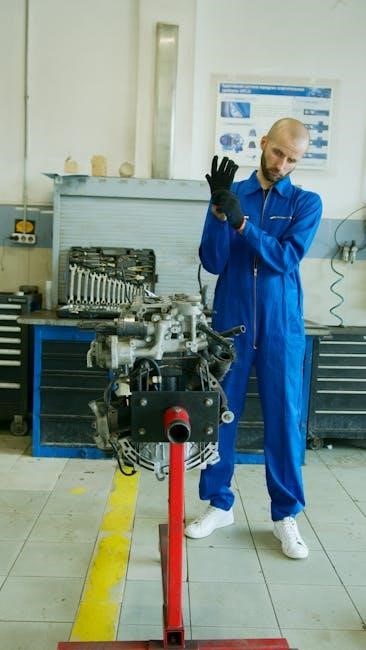
Rexroth A10V service manuals PDFs provide detailed, step-by-step instructions, torque specifications (DIN 13), and component cleaning guidance for successful rebuilds.
Step-by-Step Disassembly Instructions
Rexroth A10V pump disassembly, as outlined in the service manual PDF, requires meticulous attention to detail. Begin by relieving all pressure and disconnecting fluid lines. The manual guides users through removing the shaft, valve plate assembly, and cylinder block sequentially.
Detailed diagrams illustrate each stage, emphasizing proper tool usage to avoid component damage. Specific instructions cover separating the swashplate mechanism, noting critical alignment marks. The PDF stresses careful handling of internal parts, particularly pistons and seals.
Throughout the process, the manual highlights potential pitfalls and provides preventative measures. It’s crucial to document the order of removal for simplified reassembly. Following these steps ensures a controlled and efficient disassembly, preparing the pump for thorough inspection and repair.
Component Cleaning and Inspection
The Rexroth A10V service manual PDF emphasizes thorough cleaning of all disassembled parts. Use a non-abrasive solvent to remove hydraulic fluid, debris, and contaminants. Inspect each component – cylinder block, pistons, valve plate, and swashplate – for wear, scoring, or damage.
Pay close attention to seal surfaces and piston shoes, checking for signs of erosion. The manual details acceptable wear limits and provides guidance on component replacement. Examine the swashplate for pitting or distortion, as this impacts pump performance.
Carefully inspect threads and mating surfaces for damage. Document all findings before reassembly. Proper cleaning and inspection are vital for identifying root causes of failure and ensuring a reliable repair.
Torque Specifications (DIN 13)
The Rexroth A10V service manual PDF strictly adheres to DIN 13 standards for fastener torque. Correct torque application is critical for preventing leaks and ensuring component integrity. The manual provides detailed tables specifying torque values for all bolts and screws, categorized by size and grade.
It’s crucial to use a calibrated torque wrench and follow the specified tightening sequence. Over-tightening can damage threads or distort components, while under-tightening risks loosening during operation.
The documentation notes that maximum tightening torques are detailed within the instruction manual itself. Always consult the relevant section for the specific A10V model being serviced to guarantee accurate and safe reassembly.
Reassembly Best Practices
Successful A10V pump reassembly, guided by the service manual PDF, demands meticulous attention to detail. Prioritize cleanliness; all components must be spotless before assembly to prevent contamination. Utilize new seals and O-rings as a standard practice, even if the originals appear undamaged.
Lubricate all moving parts with the recommended hydraulic fluid during reassembly. Carefully align components, ensuring proper seating of the valve plate and piston assembly.

Adhere strictly to the specified torque specifications (DIN 13) for all fasteners. A systematic approach, following the disassembly sequence in reverse, minimizes errors and ensures a reliable, long-lasting repair.

Specific A10V Models & Variations
Rexroth A10V models, like the A10VSO 18 DR/31R-PKC62N00, have unique details; the service manual PDF clarifies these differences and specifications.
A10VSO 18 DR/31R-PKC62N00 – Detailed Overview
Specifically, the A10VSO 18 DR/31R-PKC62N00 is a variable displacement axial piston pump frequently covered within Bosch Rexroth service manuals. The spare parts list (R910940516, drawing R910926402) is crucial for identifying components during repair.
The July 2015 version of the manual details this model’s specifications, including dimensions and through-drive configurations. Understanding the D flange or C flange housing options (as noted in RE 92701/06.2016) is vital.
DIN 13 thread specifications and maximum tightening torques are also outlined, ensuring proper assembly. Accessing the correct PDF version, based on the date (29.09.2015), is paramount for accurate servicing.
A10VO Series Differences
Rexroth hydraulic pump A10VO series manuals, revised as late as May 1, 2009, highlight distinctions from the standard A10VSO line. These differences necessitate referencing specific documentation for accurate maintenance and repair procedures.
Service manuals (like RE 92701/06.2016) detail variations in component design and functionality. Concord Road Equipment Mfg., Inc. emphasizes the importance of thoroughly reading all instructions before any service attempt.
Understanding these nuances is critical, as improper servicing based on the wrong manual can lead to pump failure. Always confirm the manual corresponds to the exact A10VO model being worked on, paying attention to version control dates.
Flange Types (C Flange, D Flange)
Rexroth A10V series pumps utilize both C and D flange configurations, significantly impacting mounting and compatibility. Service manuals, such as RE 92701/06.2016, clearly illustrate these distinctions with dimensional drawings.
The choice of flange dictates the appropriate adapter plates and seals required during disassembly and reassembly. Incorrect flange identification can lead to leakage or improper pump alignment.
PDF documentation details housing variations specifically for each flange type (housing with C flange, housing with D flange). Always verify the flange type on the pump itself and consult the corresponding section within the service manual for accurate procedures.